
Sagittaria subulata
Overview
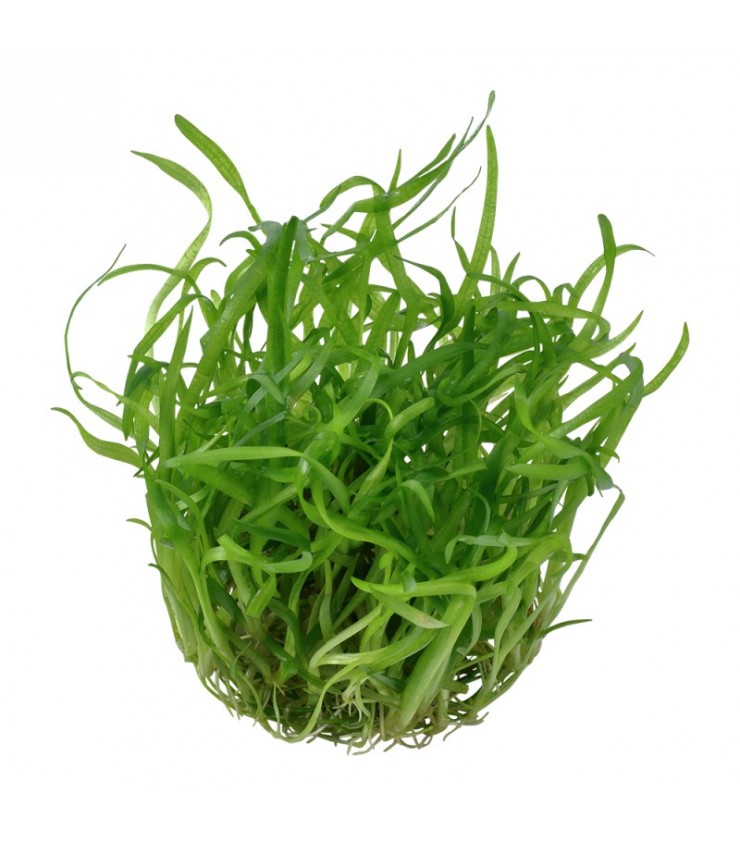
Sagittaria subulata, commonly known as Dwarf Sagittaria, is a versatile and attractive foreground plant that resembles grass with its thin, green leaves. This plant is perfect for creating a natural, carpeted look in an aquarium, providing excellent ground cover that enhances the overall aesthetic of the tank.
Position in Aquarium
- Location: Used to create a natural edge along the front of the middle section, transitioning smoothly to the foreground.
- Grouping: Plant densely to achieve a lush, carpet-like appearance that visually and physically bridges the foreground and midground areas.
Care Requirements
Lighting
- Intensity: Medium to high
- Duration: 10-12 hours per day to promote dense growth and prevent elongation of leaves.
Water Conditions
- Temperature: 20-26°C (68-79°F)
- pH: 6.0-7.5
- Hardness: Soft to moderately hard, 3-12 dKH
Substrate
- Type: Prefers a fine, nutrient-rich substrate to support rapid root development and growth.
CO2
- Addition: Beneficial for promoting faster growth and denser carpet formation.
- Rate: 10-20 mg/L
Fertilization
- Macro Nutrients: Regular supplementation is important, especially in planted tanks with high lighting and CO2.
- Micro Nutrients: Regular dosing with trace elements, including iron, helps maintain vigorous growth and vibrant green color.
Pruning and Maintenance
- Pruning Frequency: Moderate; trim back as needed to control spread and maintain the desired carpet thickness.
- Trimming Technique: Cut leaves at the base to encourage new growth from the roots.
Propagation
- Method: Spreads easily by sending out runners that form new plants. These can be detached and replanted as needed to fill in gaps or expand the carpet.
- Growth Rate: Fast under optimal conditions, quickly filling in the designated area.
Common Issues
- Thinning: Can occur in areas with inadequate lighting or insufficient nutrients.
- Algae Growth: Leaves can become a substrate for algae if nutrient levels are unbalanced or lighting is excessive without corresponding CO2.
Additional Tips
- Planting Depth: Ensure that the crowns of the plants are not buried too deeply in the substrate to avoid rot.
- Spatial Management: Regularly manage the spread of runners to maintain a neat and defined carpet area, especially near the front glass for clear viewing.