
Microsorum Pteropus var. Trident
Overview
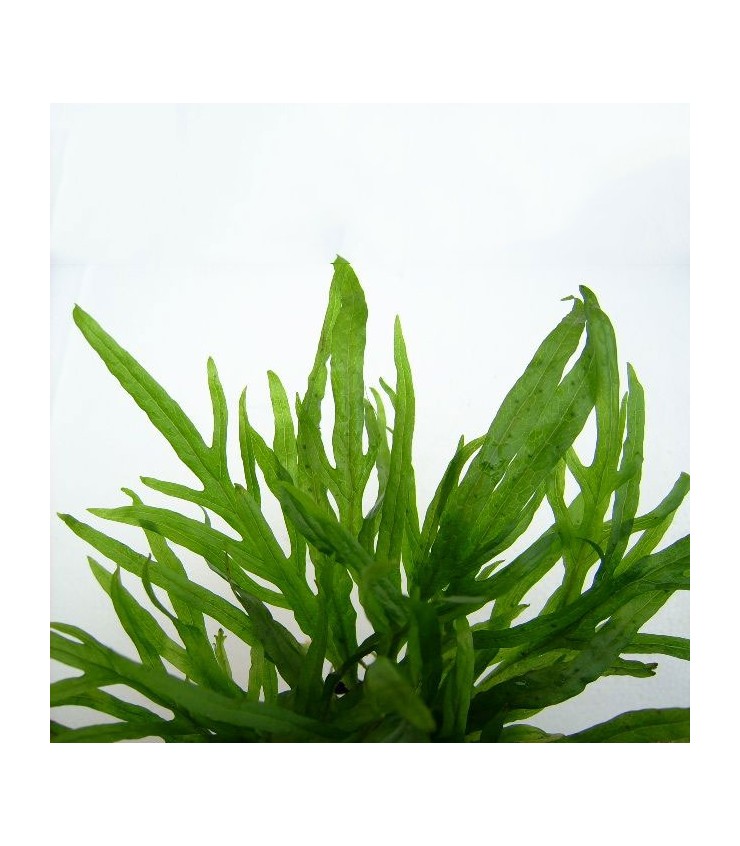
Microsorum Pteropus var. Trident, commonly known as Trident Java Fern, is renowned for its unique leaf shape that resembles a trident. This fern is highly prized for its low maintenance requirements and its ability to thrive in a variety of water conditions, making it ideal for both novice and experienced aquarists. Its delicate, finely divided leaves add intricate texture to any aquascape.
Position in Aquarium
- Location: Near the center of the middle region, but slightly off to one side (preferably the left side if space allows).
- Grouping: Can be planted directly into the substrate or attached to driftwood or rocks to elevate its position and enhance visibility.
Care Requirements
Lighting
- Intensity: Low to medium
- Duration: 8-10 hours per day is sufficient, as this plant can thrive even in subdued lighting.
Water Conditions
- Temperature: 20-28°C (68-82°F)
- pH: 6.0-7.5
- Hardness: 3-12 dKH
Substrate
- Type: Does not require substrate if attached to driftwood or rocks; if planted, a nutrient-rich substrate can be beneficial.
CO2
- Addition: Not necessary
- Rate: Can benefit from CO2 supplementation but grows well without it.
Fertilization
- Macro Nutrients: Minimal requirements
- Micro Nutrients: Beneficial to provide occasional liquid fertilization, especially if attached to wood or rocks.
Pruning and Maintenance
- Pruning Frequency: Very low; trim only to remove damaged or excessively old fronds.
- Trimming Technique: Cut fronds at the base near the rhizome to keep the plant looking tidy.
Propagation
- Method: Propagates easily by division. Separate portions of the rhizome with a few leaves attached and reattach to new surfaces.
- Growth Rate: Slow to moderate; new growth emerges directly from the rhizome.
Common Issues
- Leaf Blackening: Can occur if exposed to too much direct light.
- Algae Growth: Susceptible to algae on leaves if nutrients in the water are imbalanced.
Additional Tips
- Placement Flexibility: Utilize its ability to grow on vertical surfaces to add depth and vertical interest to the aquascape.
- Aquascaping Uses: Excellent for creating a natural backdrop or filling gaps between rocks and wood, providing a soft contrast to harder aquascaping elements.