
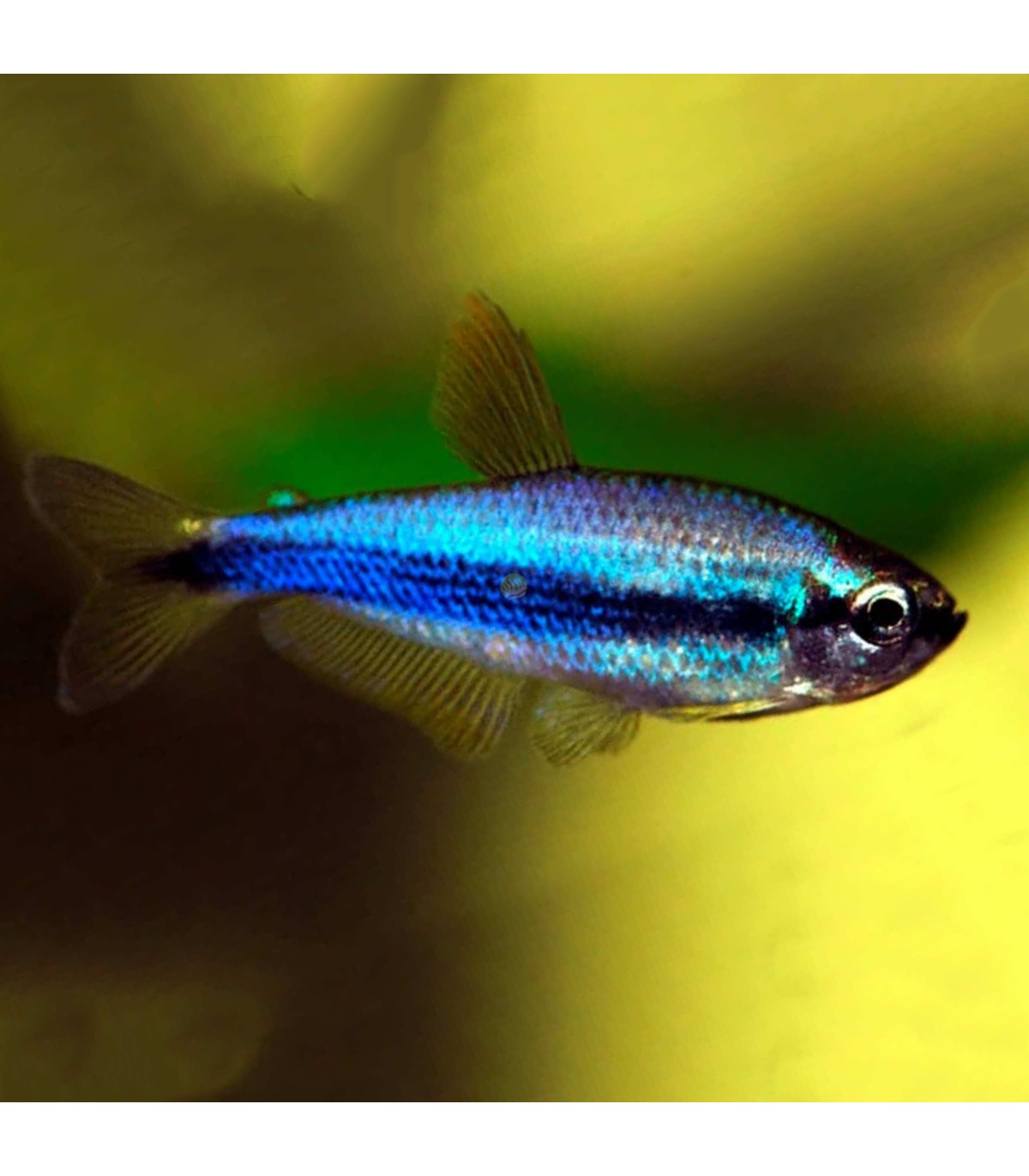
Blue Emperor Tetras (Inpaichthys kerri)
Care Requirements
- Water Parameters: Blue Emperor Tetras thrive in a pH range of 6.0-7.5. They prefer slightly acidic to neutral water.
- Temperature: The ideal temperature range for Blue Emperor Tetras is 23-27°C (73-81°F).
- Tank Setup: A planted tank with plenty of swimming space and some shaded areas provided by floating plants or overhanging decorations is ideal. Use a dark substrate to enhance their colors.
- Water Conditions: Maintain high water quality with regular water changes and efficient filtration. Blue Emperor Tetras are relatively hardy but still benefit from stable water conditions.
Feeding Habits
- Diet: Blue Emperor Tetras are omnivorous. They do well on a diet of high-quality flake food, small pellets, and live or frozen foods such as brine shrimp, daphnia, and bloodworms.
- Feeding Frequency: Feed them once or twice daily, providing only what they can consume within a few minutes to avoid overfeeding.
Behavior
- Activity: Blue Emperor Tetras are active and peaceful, often swimming in the mid-levels of the tank. They are known for their graceful movement and vibrant colors.
- Social Structure: They should be kept in groups of at least 6-8 individuals to promote natural schooling behavior and reduce stress.
- Breeding: Breeding Blue Emperor Tetras in a home aquarium is possible. They are egg scatterers, laying eggs among fine-leaved plants or spawning mops. Slightly acidic water and a temperature around 26°C (79°F) can encourage spawning.
Tank Mates
- Compatibility: Blue Emperor Tetras are peaceful and compatible with other small, non-aggressive fish. Suitable tank mates include other tetras, rasboras, small catfish, and peaceful bottom-dwellers.
- Avoid: Avoid keeping them with larger or aggressive fish that may intimidate or harm them.
Additional Tips
- Water Stability: Ensure stable water conditions and avoid sudden changes in parameters, as Blue Emperor Tetras can be sensitive to fluctuations.
- Schooling: Keeping them in adequate numbers is important for their well-being and to observe their natural schooling behavior.
- Observation: Regularly check for signs of stress or illness, such as faded colors or lethargy, and take prompt action if needed.
Including Blue Emperor Tetras in your aquarium adds a touch of elegance and color, enhancing the aesthetic appeal while contributing to a peaceful and vibrant community tank.