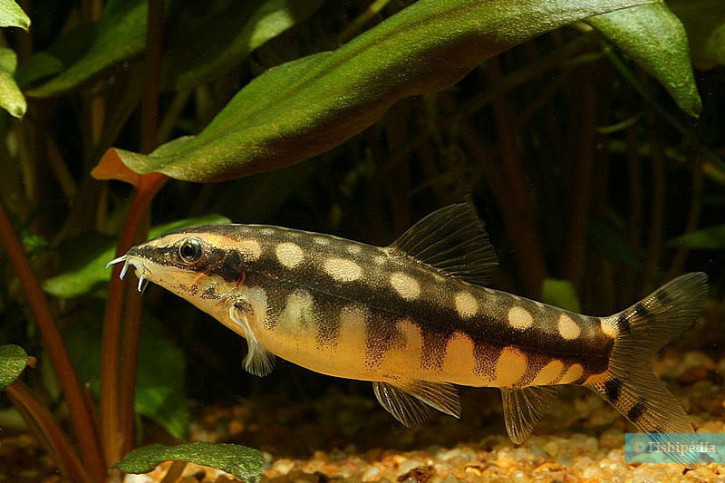
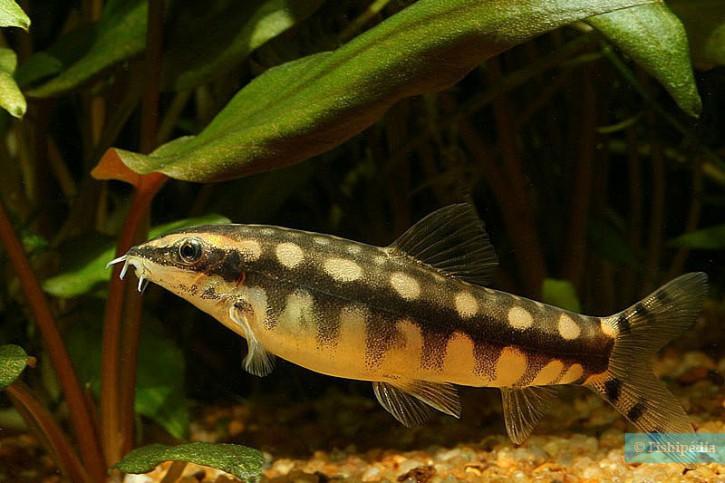
Dwarf Chain Loach (Ambastaia sidthimunki)
Care Requirements
Water Parameters: Dwarf Chain Loaches thrive in a pH range of 6.0-7.5. They prefer soft to moderately hard water with good filtration and oxygenation.
Temperature: The ideal temperature range for Dwarf Chain Loaches is 24-28°C (75-82°F).
Tank Setup: A well-planted tank with plenty of hiding spots, such as caves, driftwood, and densely planted areas, is ideal. They appreciate a sandy substrate and areas with moderate water flow.
Water Conditions: Dwarf Chain Loaches are sensitive to poor water quality. Ensure regular water changes and maintain a clean environment with stable parameters.
Feeding Habits
Diet: Dwarf Chain Loaches are omnivorous. In the wild, they consume small invertebrates, biofilm, and plant matter.
Supplemental Feeding: In the aquarium, provide a varied diet including high-quality sinking pellets, frozen or live foods like brine shrimp and bloodworms, and blanched vegetables such as zucchini and cucumber. Feed small amounts that can be consumed within a few minutes.
Behavior
Activity: Dwarf Chain Loaches are active and playful, often seen darting around the tank and exploring. They are diurnal and enjoy a well-structured environment with plenty of hiding spots.
Social Structure: They are social fish and should be kept in groups of at least 5-6 to ensure they feel secure and exhibit natural behaviors.
Breeding: Breeding Dwarf Chain Loaches in home aquariums is challenging and rare. They lay eggs in hidden areas, and the fry are difficult to rear.
Tank Mates
Compatibility: Dwarf Chain Loaches are compatible with other peaceful, small to medium-sized fish and invertebrates. Suitable tank mates include tetras, rasboras, barbs, peaceful cichlids, and shrimp.
Avoid: Avoid keeping them with large or aggressive fish that may harm them.
Additional Tips
Hiding Spots: Provide plenty of plants, caves, and other hiding places to make them feel secure and reduce stress.
Observation: Regularly check for signs of stress or disease, such as decreased activity or visible weight loss.
Active Swimmers: Ensure the tank has a secure lid as Dwarf Chain Loaches are known to jump.
Including Dwarf Chain Loaches in your aquarium adds lively activity and helps with pest control, such as consuming small snails, contributing to a dynamic and balanced tank environment.